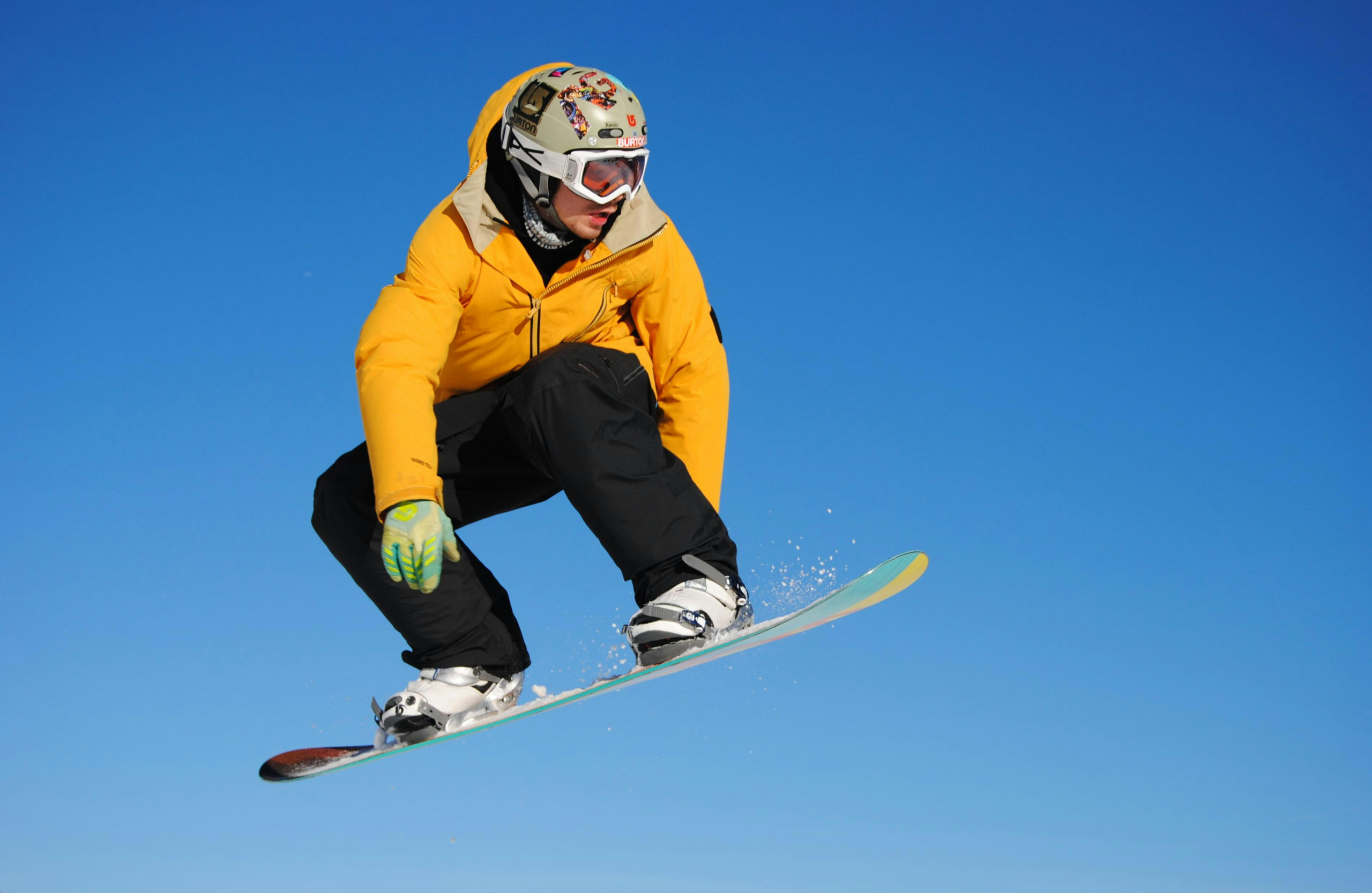
I recently learned how to snowboard and did it without taking any lessons. I watched a few YouTube videos and received some pointers from friends, but otherwise figured it out on my own, even going solo my first day on the mountain.
While there are many good resources online for what to do when learning to snowboard, I wanted to share some more conceptual tips and things to be aware of when snowboarding for the first time.
- Snowboarding is difficult to learn. They say that snowboarding is hard to learn and easy to get better at, in contrast to skiing which is easy to learn and hard to get better at. The hard to learn part is definitely true of snowboarding. In fact, after optimistically choosing to bypass the bunny slope, I struggled down my first run on the snowboard falling all the way, and it wasn’t until my fourth run that I started to have a little bit of fun.
- The goal is to become one with the board. The board should operate as a natural extension of your body. When really good snowboarders are moving around on their boards, it looks like a dance and it’s not immediately obvious that they are missing any range of motion due to having their feet tied to the board. At first the board will seem heavy, rigid, and unwieldy. It will seem like it is opposing your efforts. At this stage, I found it helpful to imagine that I was forcing the board to do what I wanted it to. For example, when first trying to toe-side carve, it seems unnatural to dig in on the toe-side and lift the back edge of the board, but you just have to force it to happen. On the flip side, it’s also important to work with the board. Sometimes, when you’re just starting, it will feel like you have to surrender to the board. Trying to force certain maneuvers when your weight or momentum is going in another direction will cause you to catch an edge and go down.
- Try to fall uphill. It can be helpful to think about biasing your lean uphill when possible (note: this is not possible during turns when you have to put your weight forward and lean downhill). Falling uphill is so much better than falling downhill as you more gently fall into the mountain and slide rather than being slammed downhill into the ground. Biasing your lean uphill when learning will also minimize the risk of you catching an edge and can help with speed control.
- It’s easier to improve if you embrace falling. If you can develop a mindset where you almost want to fall or enjoy the falls as symptoms of progress, then falling will be much less scary. The fear of falling won’t impede you from trying harder runs as you progress. It might even be a good idea to set a target number of falls per day.
- Tightening your boots well helps with board control. Initially, I found it very helpful to have my boots quite tight. It improved the connection between my body and the board. I tightened my boots before I strapped into the board, and then tightened them again after I had strapped into the board and had the snowboard bindings helping to pull the boots tighter.
- Injury is a persistent risk when learning to snowboard. Wrists are particularly vulnerable as you will want to catch yourself when you fall. Try to pull your arms into your chest and fall on your chest or butt if possible.
Learning to snowboard is difficult and progress can feel slow at first, but if you are focused, you can improve at a rapid rate. My first day on the mountain, I rode the same easiest green run the entire day (in Colorado, green runs are the easiest, then blues, and blacks are the hardest). By the end of my second day, I was riding greens all over the mountain. By the end of my third and fourth days, I could ride blues. Black runs are still a work in progress.